You do not need a gym membership, a rack of dumbbells, or a single machine to get in great shape. A home workout without equipment can build real strength, raise your fitness level, and fit into even the busiest day. Your body is the only tool you need, and it is always with you.
The idea is simple: use your own body weight as resistance. Push-ups, squats, lunges, and planks can challenge every major muscle group. With the right plan and a little consistency, bodyweight training can deliver results that stand next to many gym-based routines.
In this guide, you will learn exactly how to train at home with zero equipment. You will get a complete full-body routine with clear exercises, sets, and reps, plus guidance on avoiding the mistakes that slow most beginners down.
Why Bodyweight Training Works
Many people assume you need weights to get stronger, but your muscles cannot tell the difference. When you move your own body against gravity, muscles contract, fatigue, and adapt by growing stronger, just as they do under a loaded bar.
A consistent no-equipment routine can:
- Build functional strength for daily life, like lifting, carrying, and climbing stairs.
- Improve balance, mobility, and posture by challenging your stabilizing muscles.
- Burn calories and support fat loss, especially with short rest periods.
- Save money and time: no commute, no fees, no waiting for machines.
The catch: you must progress the training. Repeating the same easy routine forever stops producing results, so this guide includes progression strategies to keep you improving.
Setting Up Your Workout Space
You need a clear patch of floor about the size of a yoga mat, a sturdy chair for dips, and enough ceiling room to stand tall with arms overhead. Pick a consistent time, lay out clothes and a water bottle in advance, and treat the session like an appointment. Removing friction is half the battle at home.
The Complete Full-Body Routine
Do this three times per week on non-consecutive days, such as Monday, Wednesday, and Friday. Rest 30 to 60 seconds between exercises and 90 seconds between sections.
Warm-Up (5 Minutes)
Never skip it: it loosens joints, raises body temperature, and lowers injury risk.
1. March in place, 1 minute.
2. Arm circles, 30 seconds forward and 30 seconds backward.
3. Hip circles, 30 seconds in each direction.
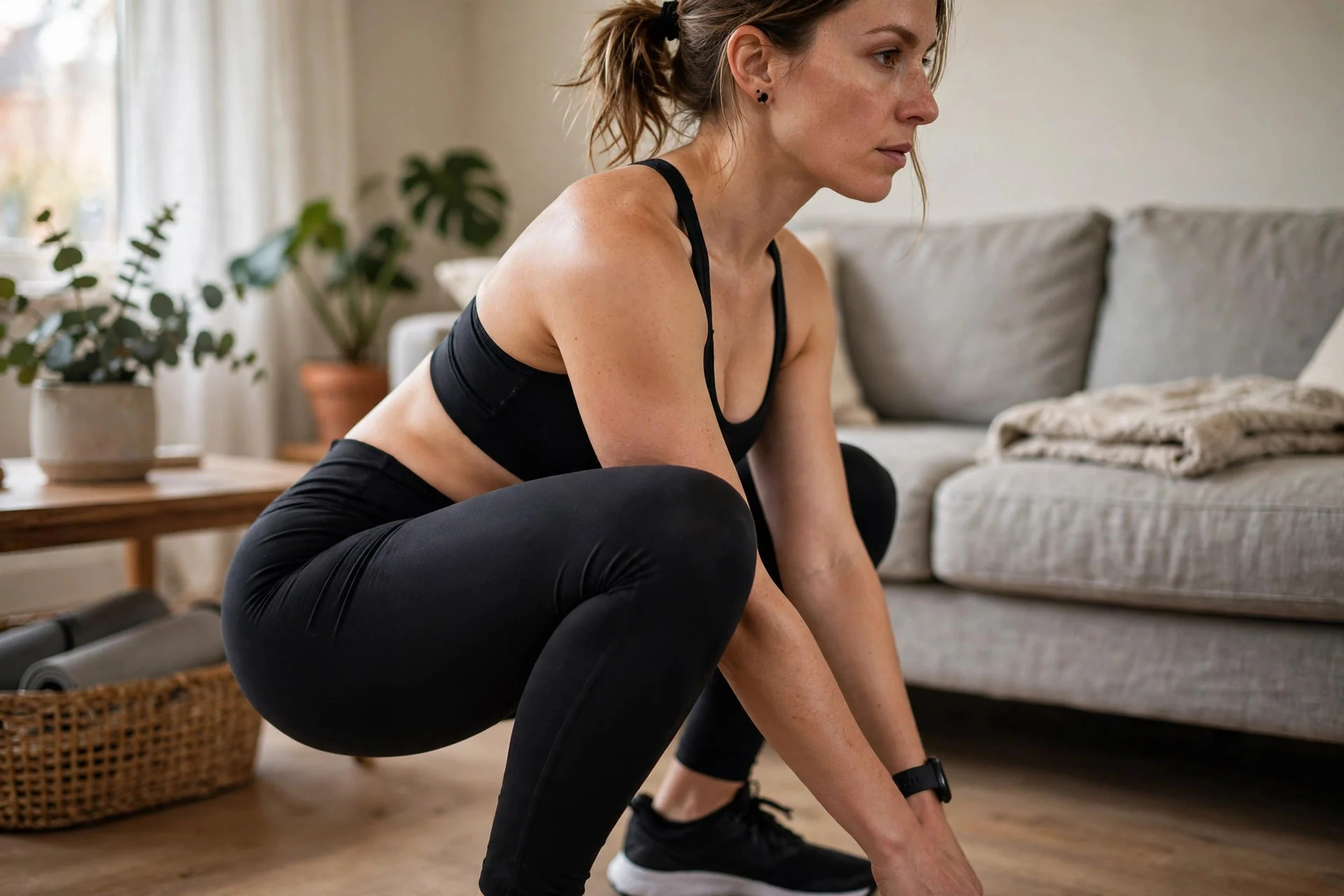
4. Bodyweight squats at half depth, 1 minute at an easy pace.
5. Jumping jacks or low-impact step jacks, 1 minute.
Lower Body: Legs and Glutes
1. Bodyweight Squats, 3 sets of 12 to 15 reps
Stand feet shoulder-width apart, toes slightly out. Sit hips back and down, chest up, knees tracking over toes, then stand fully.
2. Reverse Lunges, 3 sets of 10 reps per leg
Step one foot straight back and lower until both knees near 90 degrees, then push through the front heel to stand. Reverse lunges are gentler on knees than forward lunges.
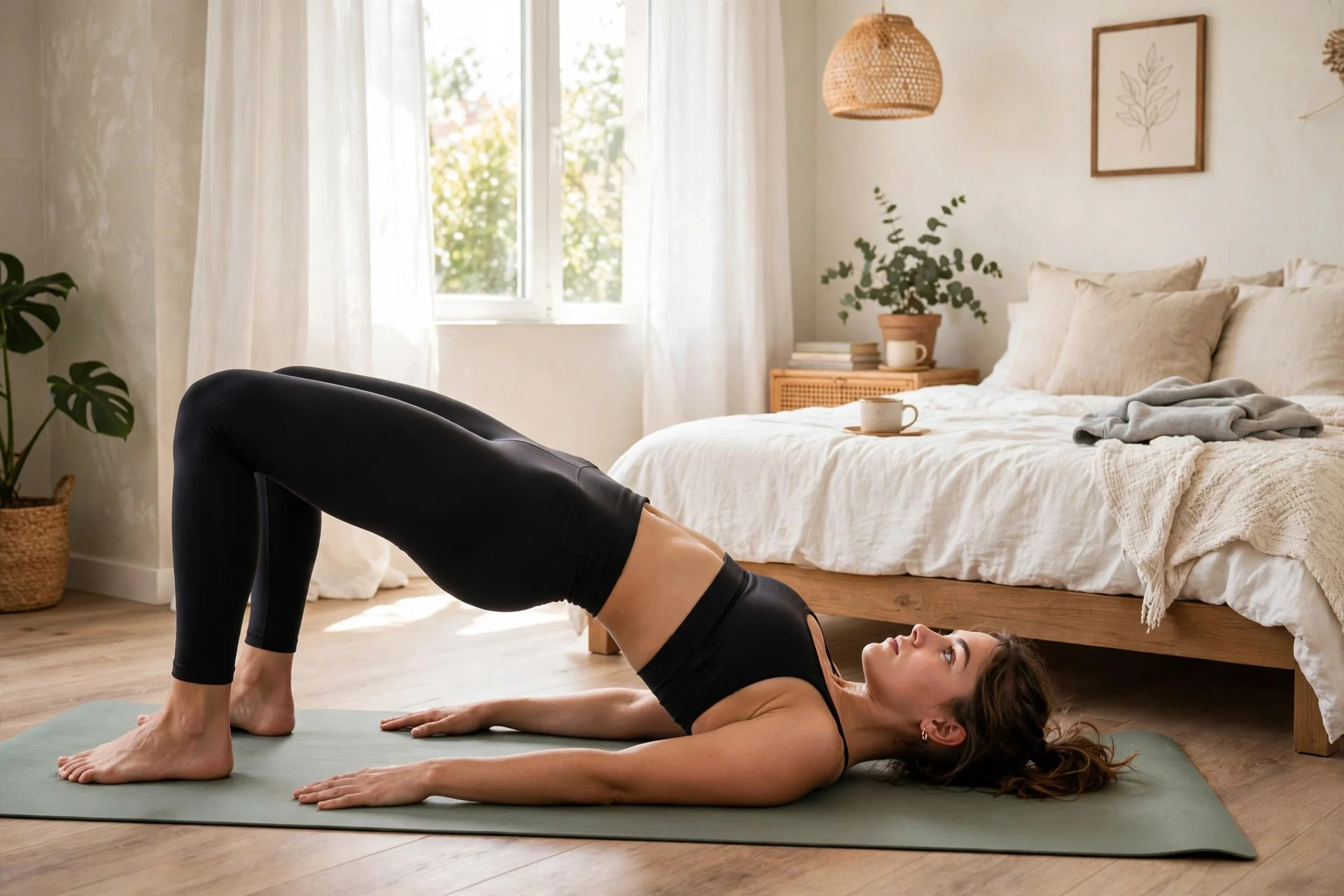
3. Glute Bridges, 3 sets of 15 reps
Lie on your back, knees bent, feet flat. Squeeze glutes and lift hips until your body forms a straight line from shoulders to knees, then lower slowly.
Upper Body: Chest, Shoulders, and Arms
1. Push-Ups, 3 sets of as many good reps as you can
From a plank with hands under shoulders, lower your chest toward the floor and press up. Use knees on the floor or hands on a sturdy table to make it easier.
2. Tricep Dips, 3 sets of 10 to 12 reps
Sit on a sturdy chair edge, hands beside hips. Slide forward, bend elbows to lower your body, then press up, keeping your back close to the chair.
3. Superman Holds, 3 sets of 20 seconds
Lie face down, arms overhead. Lift arms, chest, and legs, squeeze back and glutes, and hold. This strengthens postural muscles.
Core: Abs and Obliques
1. Forearm Plank, 3 sets of 20 to 40 seconds
Rest on forearms and toes, body in one straight line. Brace your abs and do not let hips sag or pike.
2. Dead Bugs, 3 sets of 8 reps per side
Lie on your back, arms to the ceiling, knees at 90 degrees. Slowly lower opposite arm and leg without arching your lower back, then switch sides.
3. Mountain Climbers, 3 sets of 20 seconds
From a push-up position, drive knees toward your chest alternately. Keep hips level and core tight instead of bouncing.
Cool-Down (5 Minutes)
Walk in place for one minute, then stretch quads, hamstrings, chest, shoulders, and hip flexors for 20 to 30 seconds each. Finish with three slow, deep breaths.
Your First 4 Weeks
Progress steadily instead of mastering everything on day one. Week 1: do the routine twice, focusing on form. Week 2: move to three sessions and add a rep or two per exercise. Week 3: shorten rests to 30 seconds. Week 4: try one harder variation, such as decline push-ups. Small weekly increases turn a beginner routine into lasting progress.
Common Mistakes
1. Rushing through reps.
Two slow, controlled squats beat ten sloppy ones. Take two seconds to lower and one second to lift on every rep.
2. Skipping the warm-up and cool-down.
Jumping into hard exercise cold is how home exercisers get hurt. Five easy minutes at each end is cheap insurance.
3. Doing the same workout for months.
If your last set feels easy, progress: add reps, slow the tempo, shorten rests, or try a harder variation like single-leg squats.
4. Holding your breath.
Exhale on the effort and inhale on the return. Steady breathing keeps you fueled and stable.
5. Training through sharp pain.
Muscle burn is normal; sharp or joint pain is not. Stop the exercise, and get persistent pain checked by a professional.
Pro Tips
Progress one variable at a time. When a move gets easy, add reps first, then slow the tempo, then shorten rest, and only then switch variations. Small steps prevent burnout.
Track your workouts. Log exercises, sets, and reps in a notebook or phone note. Seeing last week’s numbers makes beating them easy.
Pair exercises into supersets. Do two moves back-to-back, like squats then push-ups, to keep your heart rate up and shorten the session.
Use a circuit format on busy days. Run every exercise once with minimal rest, repeat the loop two or three times, and finish in about 30 minutes.
Schedule a lighter week every 4 to 6 weeks. Do half your usual volume for one week. Planned easy weeks prevent overuse injuries and often spark a strength jump.
Frequently Asked Questions
Can I build muscle with just bodyweight exercises?
Yes, especially for beginners. Muscles respond to tension and progressive challenge, not the source of resistance. Keep adding reps, slowing tempo, or advancing variations to keep growing.
How many days per week should I do this routine?
Three full-body sessions per week suits most people: enough stimulus to grow, enough rest to recover. Add walking or gentle stretching on off days.
How long until I see results?
Most people feel stronger within two to three weeks. Visible changes typically take six to twelve weeks of consistent training plus reasonable eating and sleep.
Is a home workout without equipment enough for weight loss?
Yes. It burns calories and builds muscle, raising your daily energy use. Pair it with sensible eating and daily walking for the best fat-loss results.
Conclusion
A home workout without equipment is one of the simplest ways to get fit. You now have a complete routine, a four-week progression plan, and the knowledge to avoid beginner mistakes.
Your next step: clear a small space and do the routine today, not tomorrow. Complete it three times this week and you will build the hardest thing in fitness, the habit.
*Disclaimer: This article is general fitness information, not medical advice. If you have a health condition, are pregnant, or have been inactive for a long time, check with a qualified professional before starting a new exercise program.*
Related: 20 Minute Full Body Workout at Home.
Related: Beginner Home Workout Routine.
Related: Bodyweight Exercises for Beginners.
Building your endurance takes time, but every session counts.

Evidence-based fitness writer sharing practical workouts, smart nutrition tips, and sustainable healthy living strategies.
Pingback: 20 Minute Full Body Workout at Home (No Gym Needed)