
Short on time? A home HIIT workout might be the most efficient exercise you’ll ever do.
HIIT (High-Intensity Interval Training) alternates short bursts of hard effort with brief recovery periods. Twenty minutes of HIIT can deliver the benefits of a much longer steady workout. No gym, no equipment, no excuses.
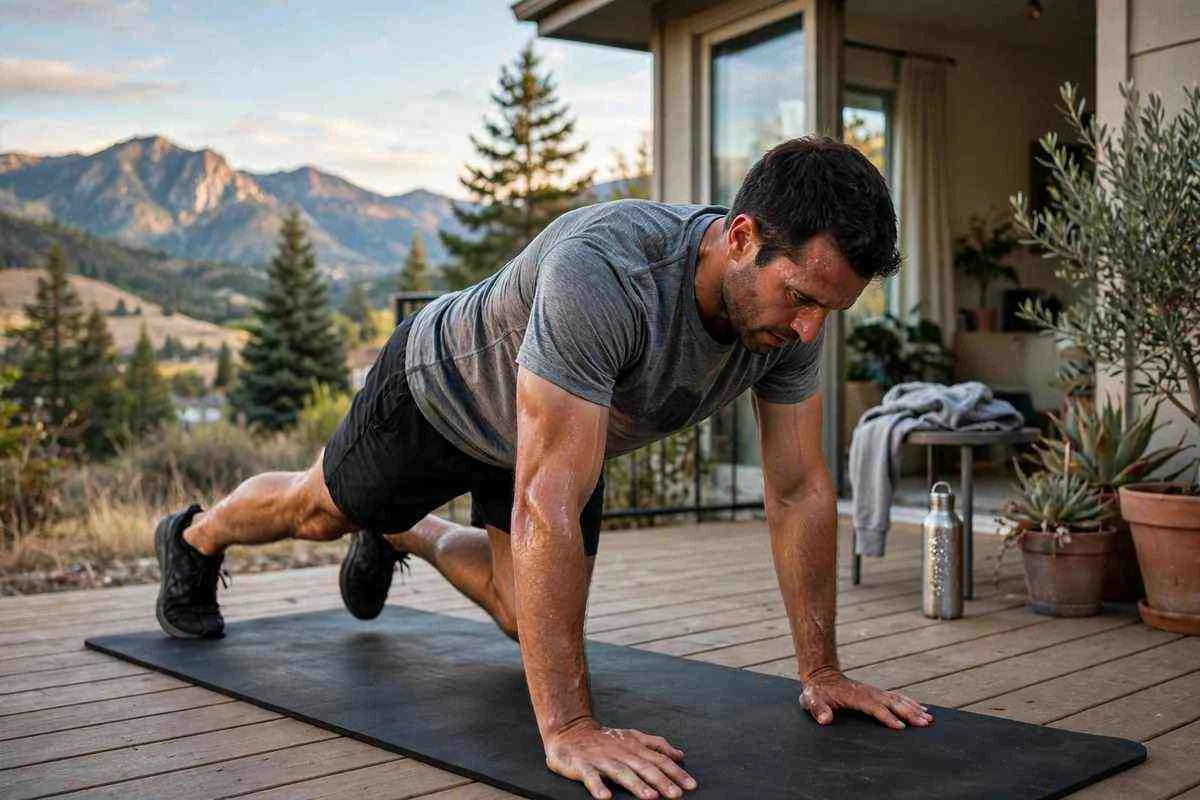
What Is HIIT and Why Does It Work?
HIIT works by pushing your heart rate high during work intervals, then letting it partially recover during rest. This pattern:
- Burns more calories in less time than steady cardio
- Triggers EPOC (excess post-exercise oxygen consumption) — you keep burning calories for hours after
- Preserves muscle better than long cardio sessions
- Improves cardiovascular fitness rapidly
Studies show 20 minutes of HIIT can match or beat 45 minutes of moderate cardio for fat loss and fitness gains.
Before You Start
Warm up for 3 minutes:
– 30 seconds: March in place
– 30 seconds: Arm circles
– 30 seconds: Leg swings (each leg)
– 30 seconds: Hip circles
– 30 seconds: Jumping jacks (easy pace)
– 30 seconds: Bodyweight squats (easy pace)
Never skip the warm-up. Cold muscles + high intensity = injury risk.
What you need:
– About 2×2 meters of clear floor space
– Water bottle nearby
– Timer (phone app works fine)
– That’s it
The 20-Minute Home HIIT Workout
Format: 40 seconds work, 20 seconds rest. Complete the circuit twice.
Round 1 & 2 — Lower Body Power
1. Jump Squats
– Squat down, then explode upward. Land softly with bent knees.
– Beginner: Regular squats (no jump)
2. Reverse Lunges (Alternating)
– Step back into a lunge, return to standing, switch legs.
– Make it harder: Add a jump when switching legs
3. Glute Bridges (Fast)
– Lie on your back, push hips up quickly, lower slowly.
– Make it harder: Single-leg glute bridges
Round 1 & 2 — Upper Body & Core
4. Push-Ups
– Standard push-ups at a challenging pace.
– Beginner: Knee push-ups or incline push-ups on a chair
5. Mountain Climbers
– In plank position, drive knees to chest as fast as possible.
– Keep hips low and core tight.
6. Plank Shoulder Taps
– In plank, tap opposite shoulder with each hand. Minimize hip rocking.
– Make it harder: Faster taps
Round 1 & 2 — Full Body Cardio
7. Burpees
– The king of HIIT exercises. Squat, jump back to plank, push-up (optional), jump forward, jump up.
– Beginner: Step back instead of jumping, skip the push-up
8. High Knees
– Run in place, driving knees to hip height. Pump your arms.
– Go as fast as you can maintain with good form.
9. Skaters
– Leap side to side like a speed skater, touching the floor with your opposite hand.
– Great for legs and coordination.
Finisher (Last 2 Minutes)
10. Plank Hold — 60 seconds
– Standard forearm plank. Breathe steadily.
11. Hollow Body Hold — 60 seconds
– Lie on your back, lift shoulders and legs off the floor, arms extended. Hold.
Cool Down (3 Minutes)
Don’t just stop. Bring your heart rate down gradually:
- 1 minute: Slow walking in place
- 30 seconds: Standing quad stretch (each leg)
- 30 seconds: Standing hamstring stretch (each leg)
- 30 seconds: Chest doorway stretch
- 30 seconds: Child’s pose
How to Progress
Week 1-2: 30 seconds work, 30 seconds rest. One round.
Week 3-4: 40 seconds work, 20 seconds rest. One round.
Week 5-6: 40/20 format. Two full rounds (the workout above).
Week 7+: Add a third round, or reduce rest to 15 seconds.
Other ways to level up:
– Choose harder exercise variations
– Move faster during work intervals
– Add a weighted vest or backpack
How Often Should You Do HIIT?
2-3 times per week with at least one rest day between sessions. HIIT is demanding — your body needs recovery.
On other days, do strength training, walking, or light activity. Doing HIIT daily leads to burnout, overtraining, and stalled progress.

Common Mistakes
- Skipping the warm-up. The #1 cause of HIIT injuries. Always warm up.
- Going too hard on day one. Start with longer rest periods. Build up gradually.
- Bad form at high speed. Speed means nothing if your form breaks down. Slow down and do it right.
- Doing HIIT every day. More isn’t better. Recovery is when adaptation happens.
- Holding your breath. Breathe rhythmically. Exhale on effort, inhale on recovery.
- Not drinking water. HIIT makes you sweat a lot. Hydrate before, during, and after.
Pro Tips
- Use a HIIT timer app. Free apps with audio cues let you focus on moving, not watching the clock.
- Put on music. Upbeat music (140+ BPM) measurably improves HIIT performance.
- Track your rounds. Note how many reps you complete per interval. Beat it next time.
- Exercise on a mat or carpet. Jumping exercises are easier on joints with some cushioning.
- Keep a towel handy. You’ll need it. Trust me.
Frequently Asked Questions
Is 20 minutes of HIIT enough?
Yes. Research shows 15-20 minutes of true HIIT provides significant cardiovascular and fat-loss benefits. Intensity matters more than duration.
Can beginners do HIIT?
Absolutely. Start with longer rest periods (30/30), choose easier exercise variations, and build up over weeks. Everyone starts somewhere.
Will HIIT burn muscle?
Not if you eat enough protein and don’t overdo it. 2-3 sessions per week alongside proper nutrition preserves muscle fine.
What’s the best time of day for HIIT?
Whenever you’ll actually do it consistently. Morning HIIT can boost energy all day; evening HIIT fits many schedules better.
Do I need to eat before HIIT?
A light snack 1-2 hours before is ideal (banana, toast). Training completely fasted is okay for short sessions but may reduce performance.
Conclusion
A home HIIT workout is the ultimate time-efficient training. Twenty minutes, no equipment, massive benefits. This workout hits every major muscle group while torching calories.
Try it three times this week. By next Monday, you’ll wonder why you ever thought you needed an hour at the gym. That intensity is exactly what makes twenty minutes enough.
This article is general fitness information, not medical advice. If you have heart conditions, joint issues, or are new to exercise, consult a qualified professional first.
Keep Reading

Fitness and wellness writer dedicated to sharing practical workouts, smart nutrition, and sustainable healthy living tips.